ODD GIRLS
As children we would sit in a circle and start the whisper game.
Each child would whisper what they heard to the next child, by the time it reached the end of the circle the whisper had changed beyond recognition. These stitched works are the visual equivalent.

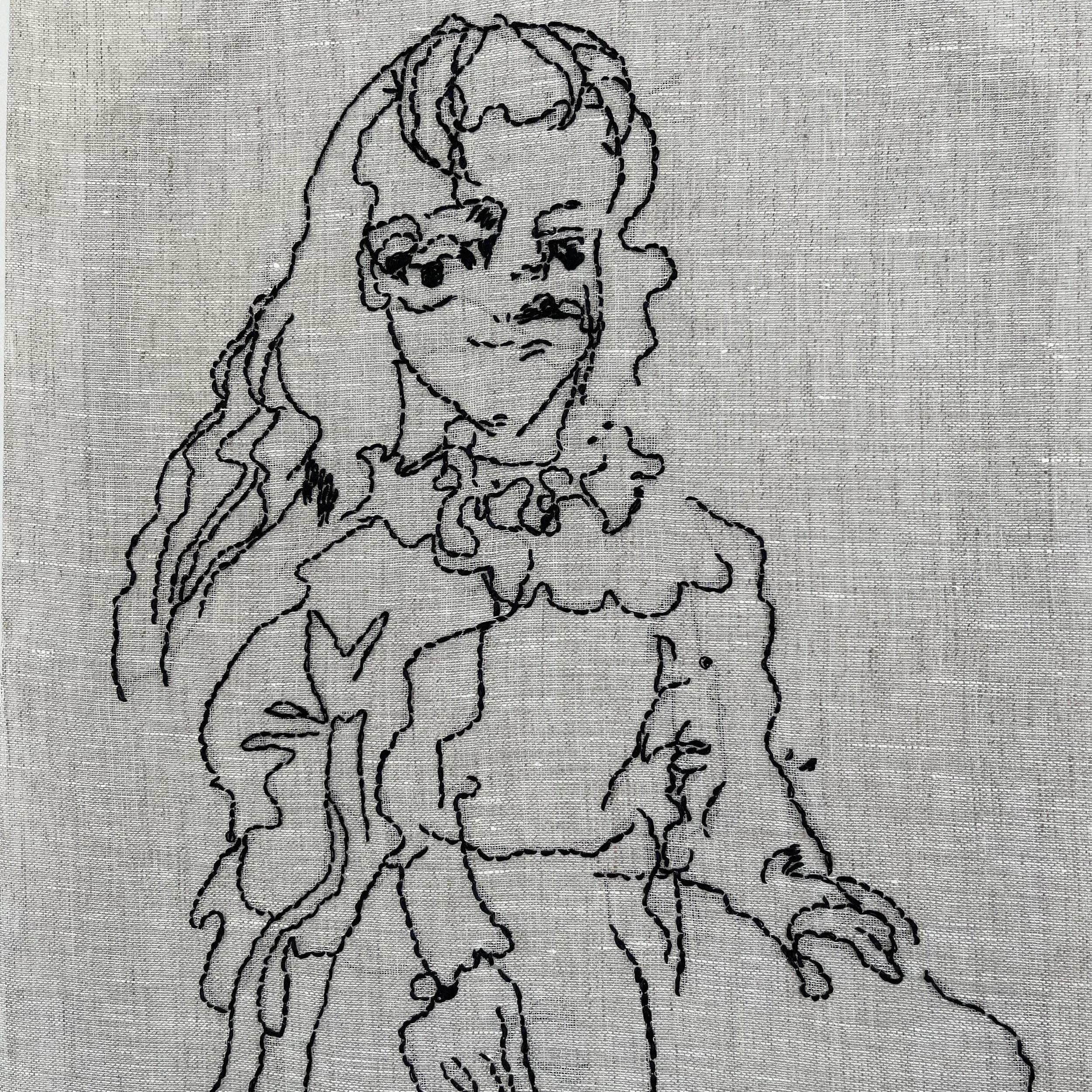
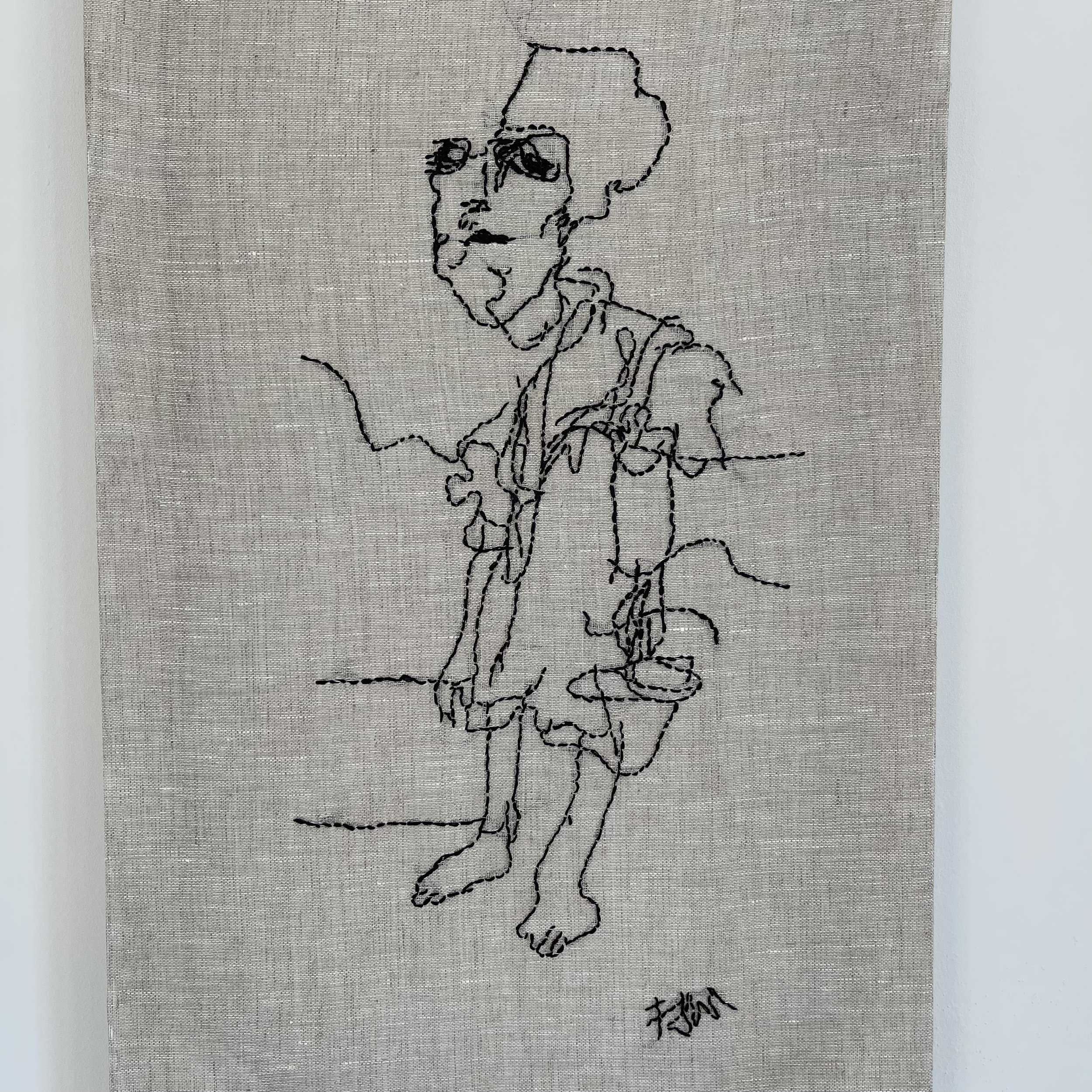
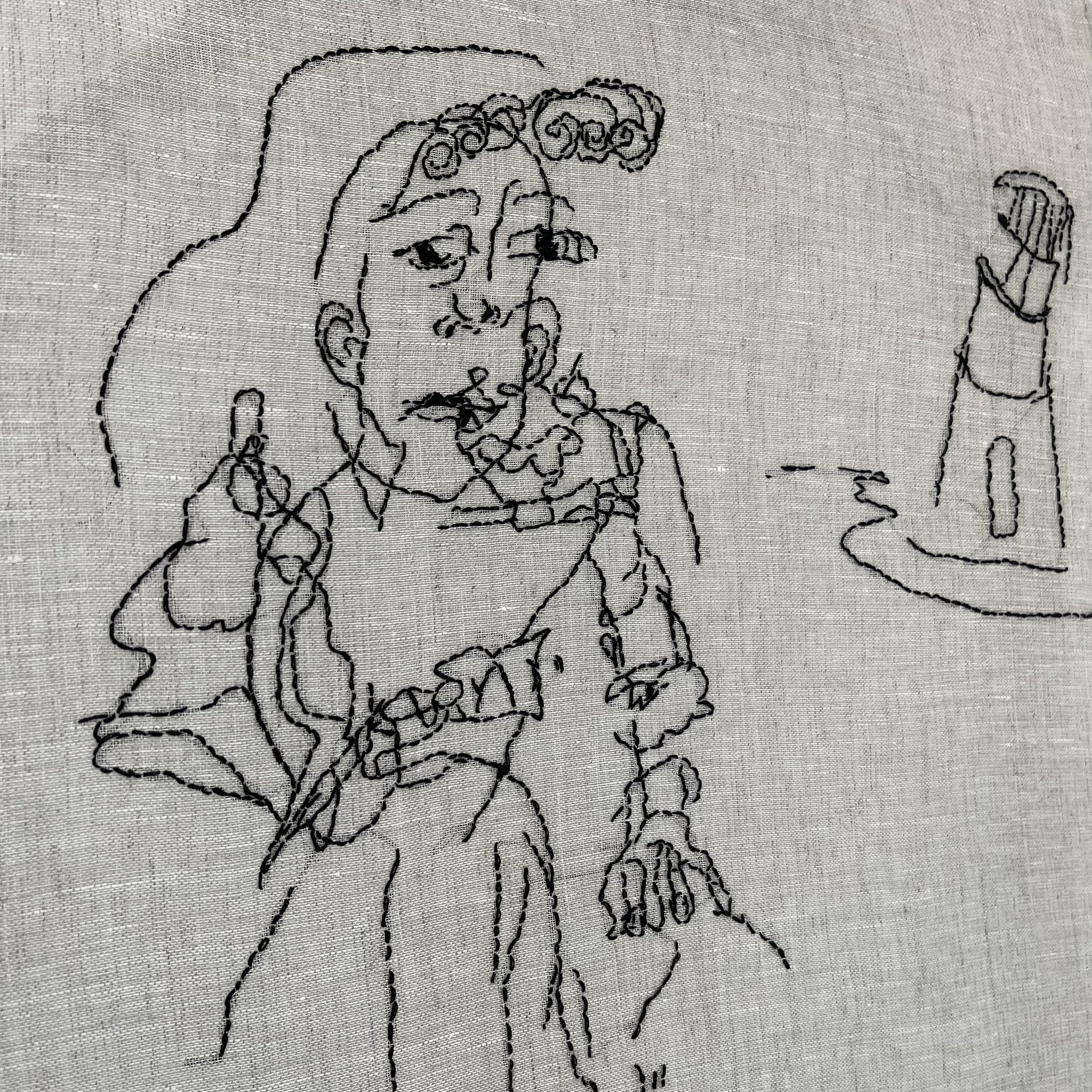

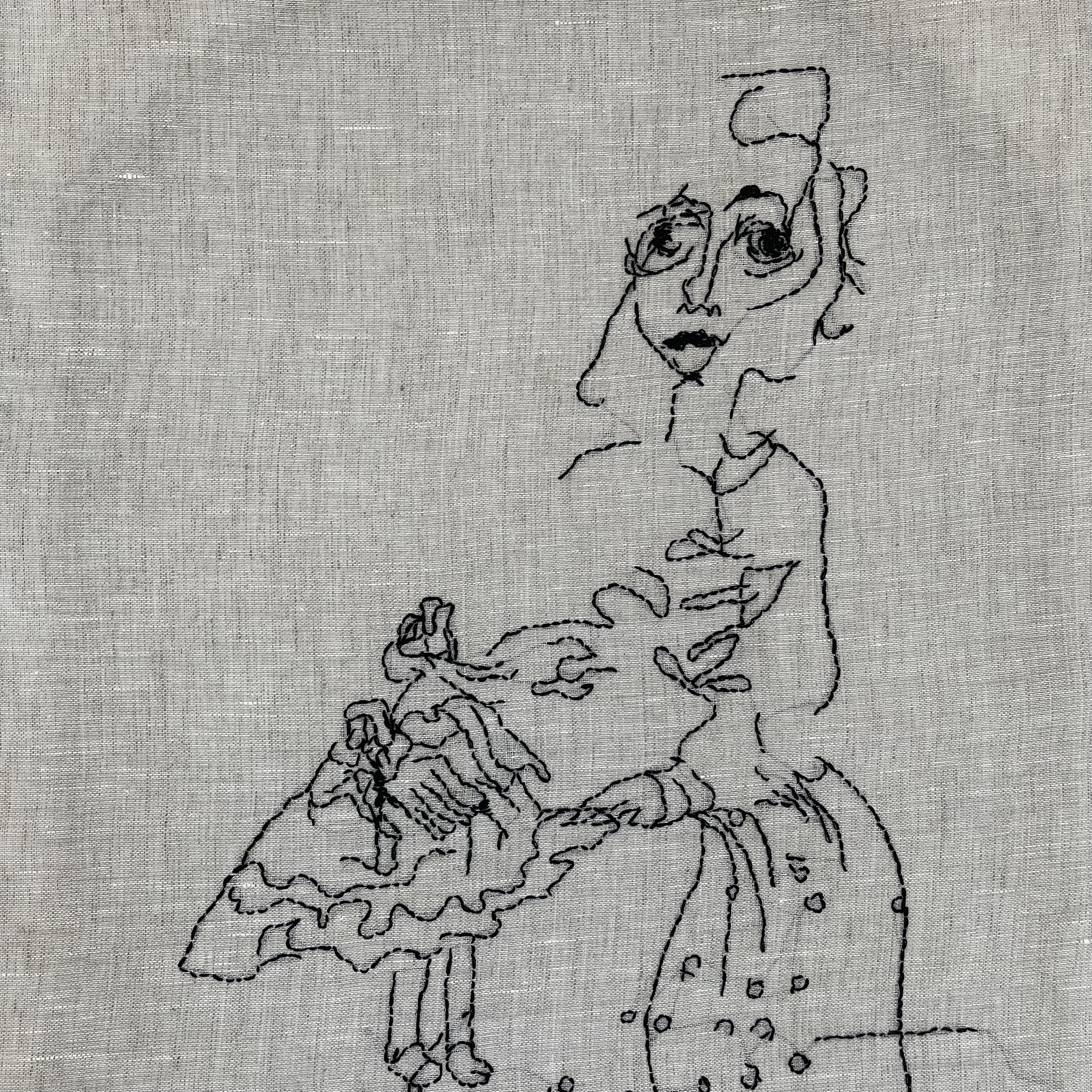


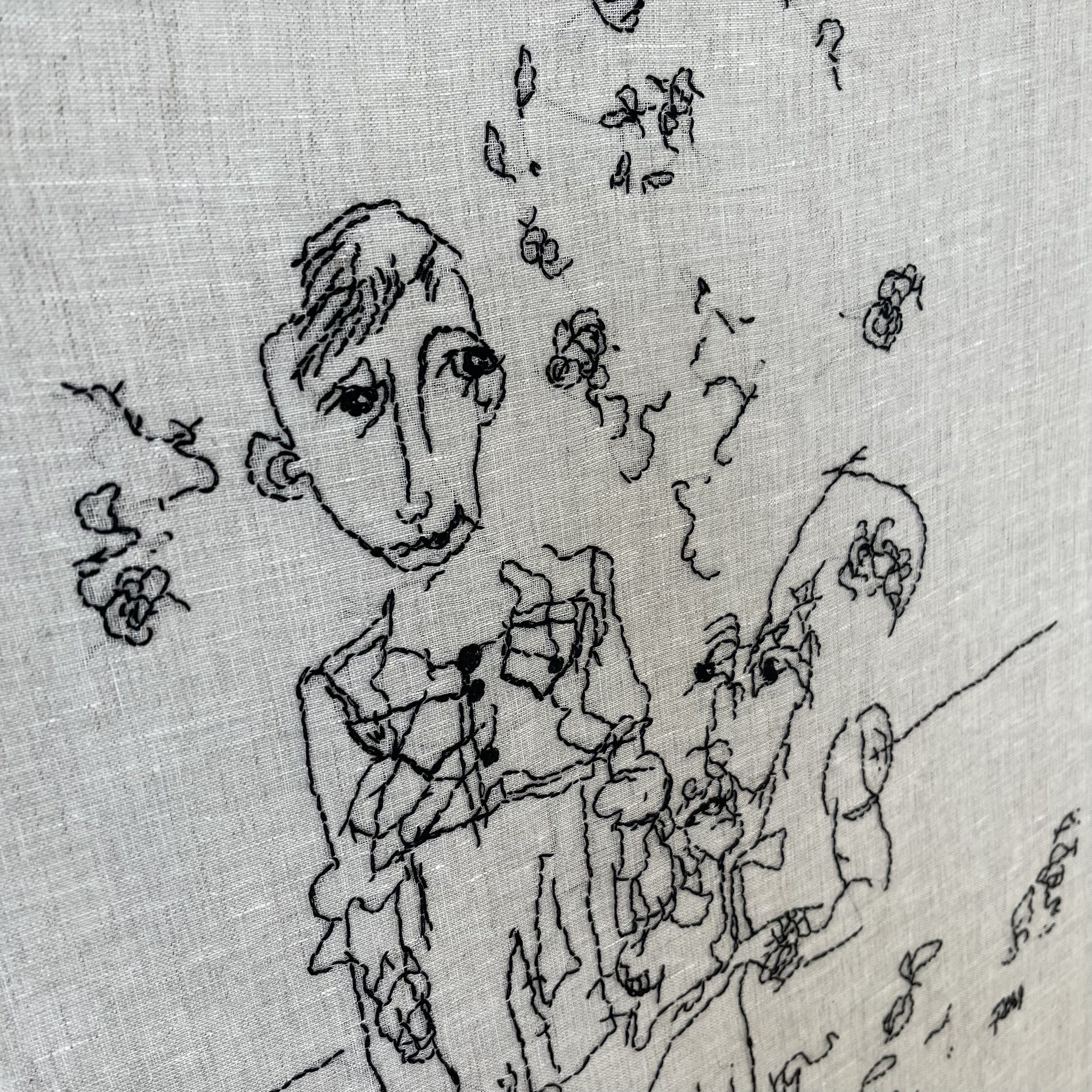
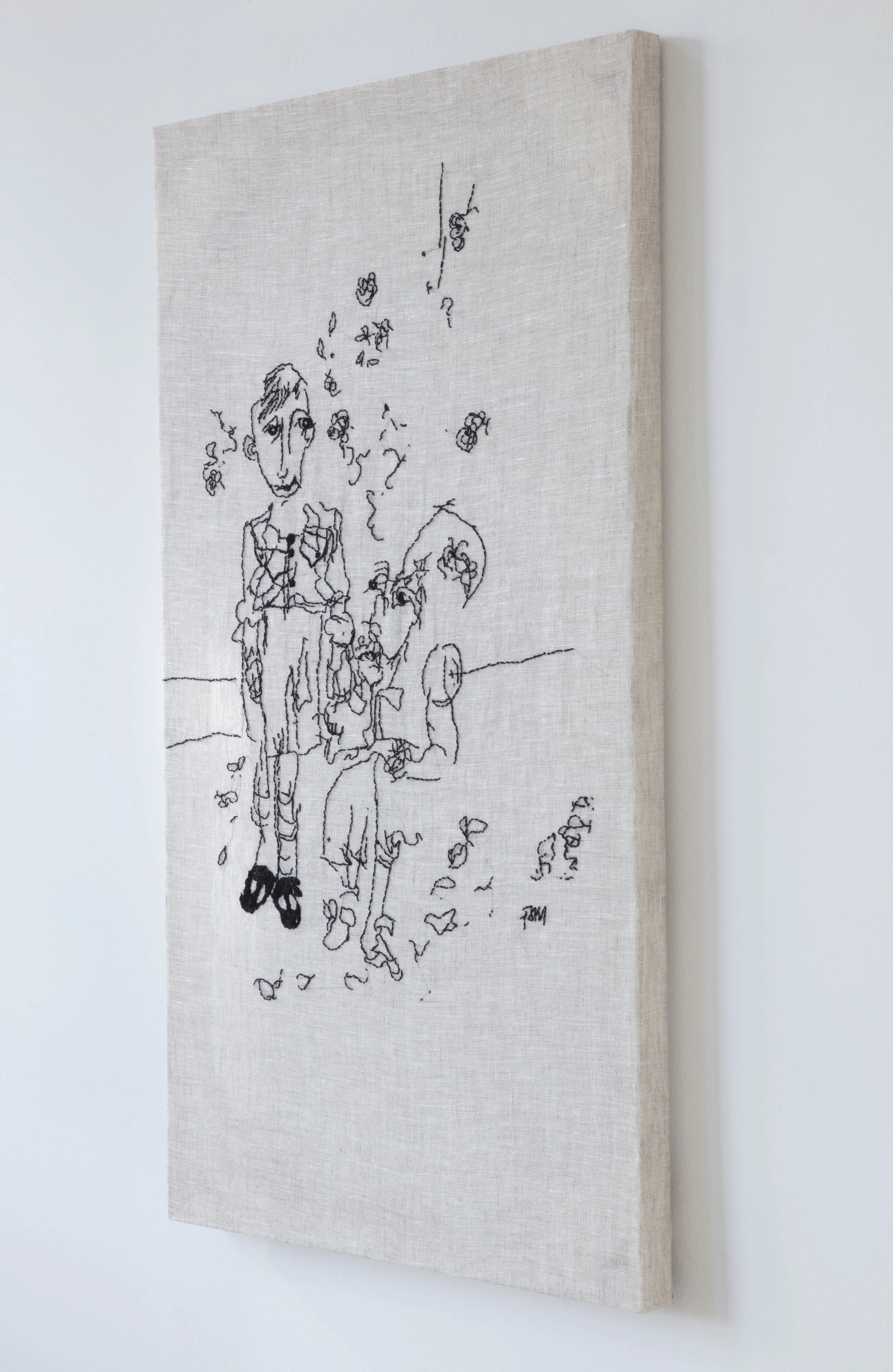
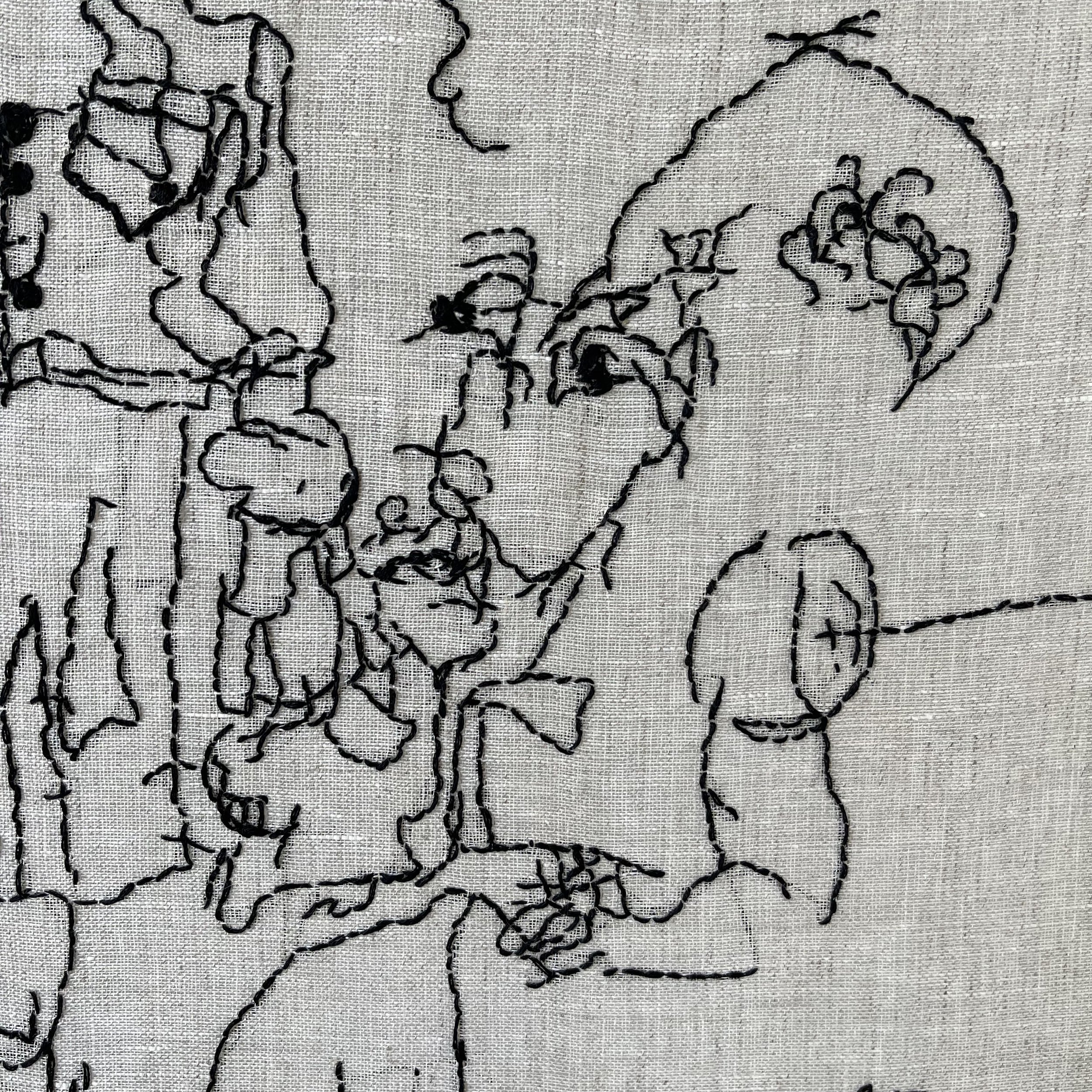


The image of each girl transitions through various processes, to become another translation of a portrait. The pathway goes from living person, to a photographic fragment a record of their existence, to a scanned file, to a computer screen, to a blind contour drawing in vanishing ink, to a stitched drawing.
In ways related to Surrealist strategies, I reach for the essence of the subject or idea through deep observation, releasing control and allowing the unexpected to unfold.
All the elements of the whisper game exist in these pieces - transformation, surprise, amusement, and wonder. An entirely new image appears in the form of abstracted stitched drawings.
STATEMENT
Odd Girls is a series of stitched portraits derived from photographic images of young girls from the 1860s. Working from these archival photographs, I employ a blind contour process, drawing without looking directly at the surface of the textile substrate. This deliberate disruption of visual control transforms the act of representation into one of embodied navigation, where the hand follows the image through memory, touch, and movement rather than sight.
The work emerges through a dialogue between historical documentation and contemporary bodily experience. The original photographs function as traces of lives captured within the social and cultural frameworks of the nineteenth century. Through the slow and repetitive labor of stitching, these fixed photographic records are translated into forms that are unstable, fragmented, and continually shifting between recognition and abstraction.
The blind contour method draws upon the legacy of Surrealist automatic drawing, in which the artist relinquishes conscious control in order to access alternative modes of perception and meaning-making. While the stitched portraits remain tethered to their historical sources, the process allows unexpected distortions, omissions, and deviations to surface. These departures from photographic accuracy create spaces where new interpretations can emerge, expanding the portrait beyond documentation and opening it to ambiguity, memory, and imagination.
Across my practice, I am interested in the persistence of human traces and the ways further meaning is found through alternative acts of translation. In Odd Girls, stitch functions simultaneously as drawing, recording, and repair. Each thread documents a physical gesture creating a layered encounter between past and present, vision and touch, archive and body.
The title Odd Girls references figures that occupy uncertain positions within systems of classification and historical narrative. Removed from their original contexts and reconstituted through a process of physical making, these young subjects become elusive presences rather than fixed identities. Their stitched forms resist the authority of the photographic image, revealing instead the instability of memory and the subjective nature of seeing.
Ultimately, Odd Girls explores how historical images continue to resonate through contemporary acts of attention and care. By combining archival source material with blind contour stitching, the series proposes that understanding is not produced solely through observation, but also through human experience, chance, and the imperfect gestures through which we encounter the past.