Artist Statement
EVOLUTION 2026
Through my work I look at how human presence is constructed, recorded, transformed, and dispersed across physical and digital systems. Working across photography, painting, sculpture, installation, printmaking, and textile-based drawing, I examine what happens to the body and its traces as they move between image, screen, archive, memory, and material space.
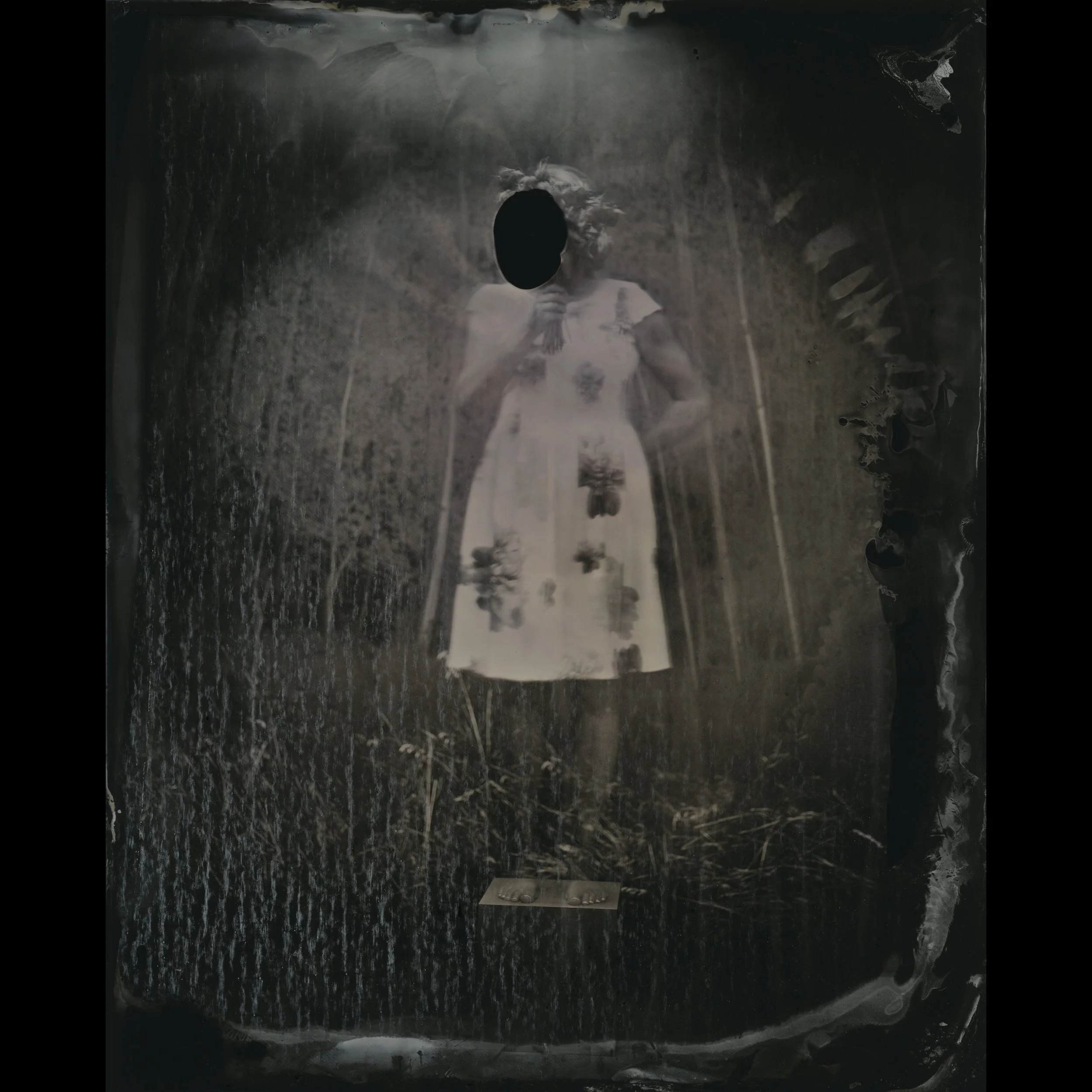
Photography remains fundamental to my practice, both as a medium and as a way of thinking about representation. My early work in fashion photography examined the female body as a constructed and circulated image, shaped by systems of looking, desire, identity, and representation. Obscurations developed this inquiry through wet-plate collodion self-portraiture in which my face is deliberately obscured. The photographic image becomes unstable: a record of a body without fixed identity, shaped by prolonged exposure, chemistry, bodily stillness, and chance.
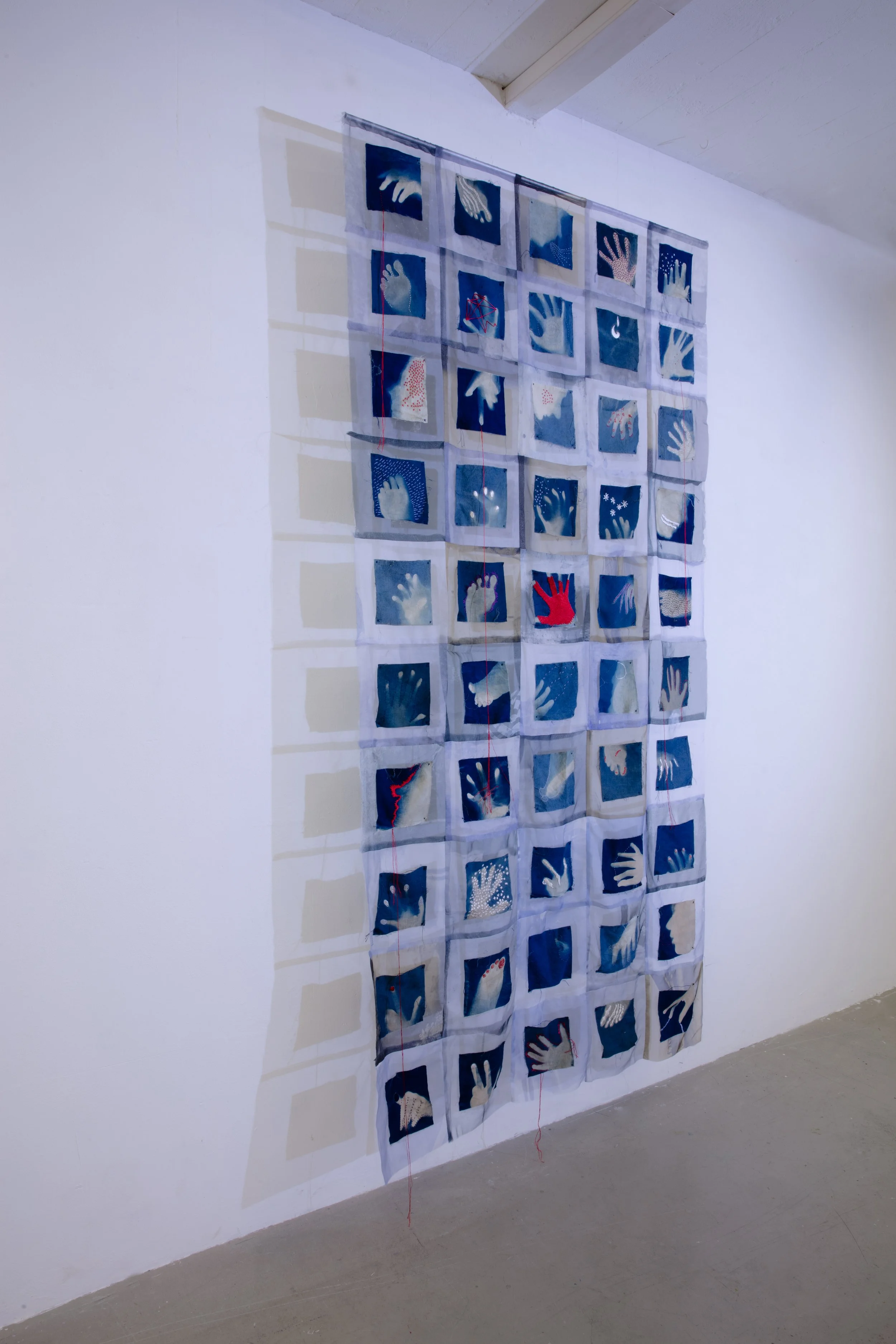
This concern with the trace became increasingly physical in Mourning Piece. The work consists of 51 cyanotype self-imprints, each recording my body through prolonged exposure to sunlight. Months later, I stitched into these photographic traces in response to the 2019 Christchurch mosque attacks. The cyanotype records where the body was; the stitch records my subsequent encounter with that trace. Photography and embroidery become two temporal layers of presence, connecting image, memory, grief, and physical labour. Mourning Piece became a pivotal transition in my practice, establishing stitch not as a departure from photography but as another way of recording, translating, and embodying the trace.
The relationship between the body and digital technology became explicit in Losing Touch (2021), a solo exhibition bringing together two interconnected bodies of work, Contact and Harvest. In Contact, resin casts of my own hands perform texting gestures, preserving fingerprints, wrinkles, and other intimate details of the body while the flattened fingertips press against an invisible screen. The hands make contact, but touch itself has been displaced by technological mediation. In Harvest, invisible paintings reveal fragments of the reductive language of social media only as the viewer moves through the space. Their surfaces evoke fingerprints and screen residue, while the work considers the voluntary and involuntary traces generated through digital interaction and the harvesting of personal data.
Together, Contact and Harvest marked an important shift in my practice. The hand became both subject and instrument, while the trace moved between something deliberately made, involuntarily recorded, and technologically extracted.
This question continues through my current work: who is recording whom, and what happens to human presence as it passes between different systems of representation?
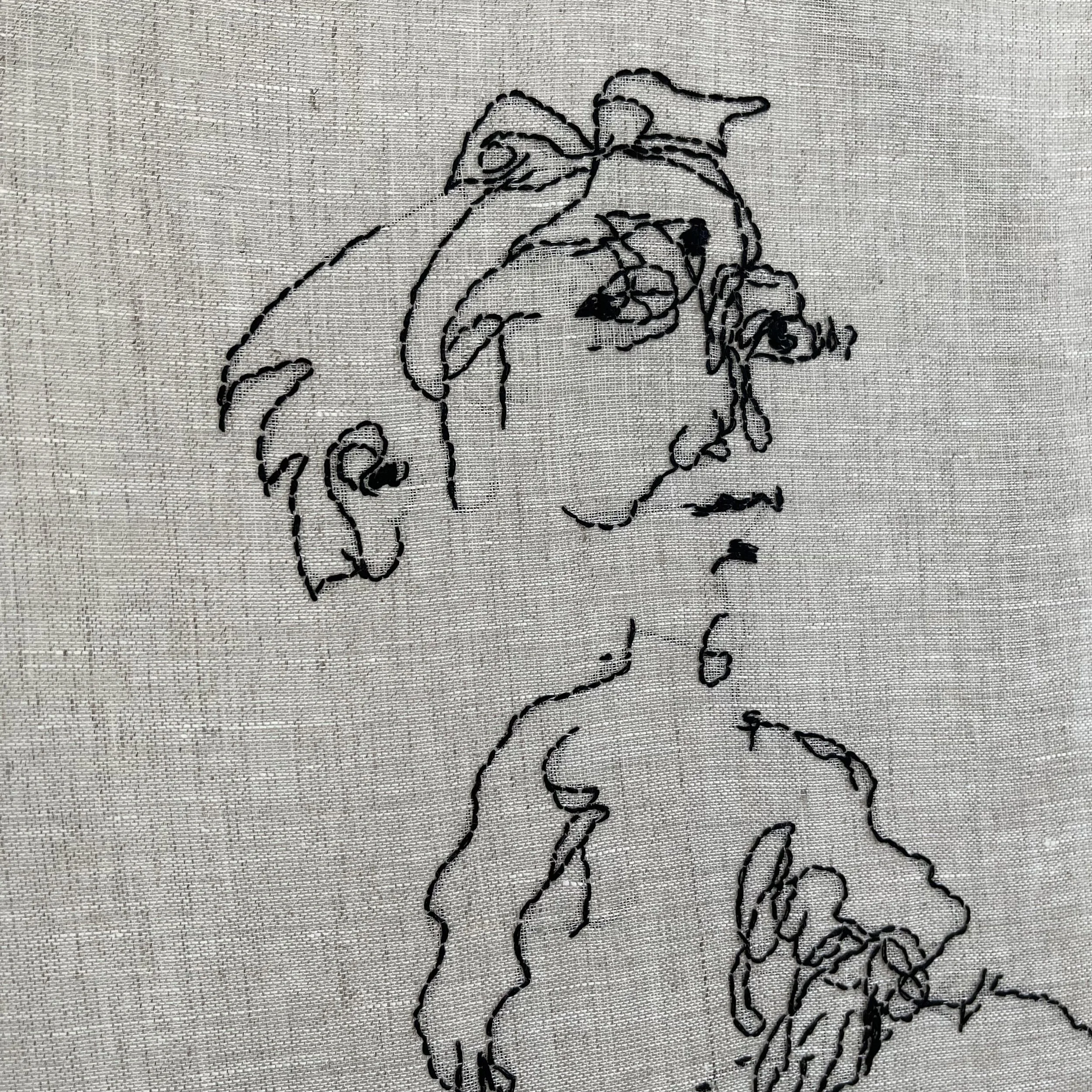
In Odd Girls, the hand becomes a form of perception. Using blind contour drawing translated into stitch, I work from photographic portraits without looking directly at the surface, allowing touch, memory, proprioception, hesitation, and chance to participate in the formation of the image. The photographic source remains present, but its authority is disrupted. The hand becomes a seeing and recording instrument, transforming an inherited image into a new bodily trace.
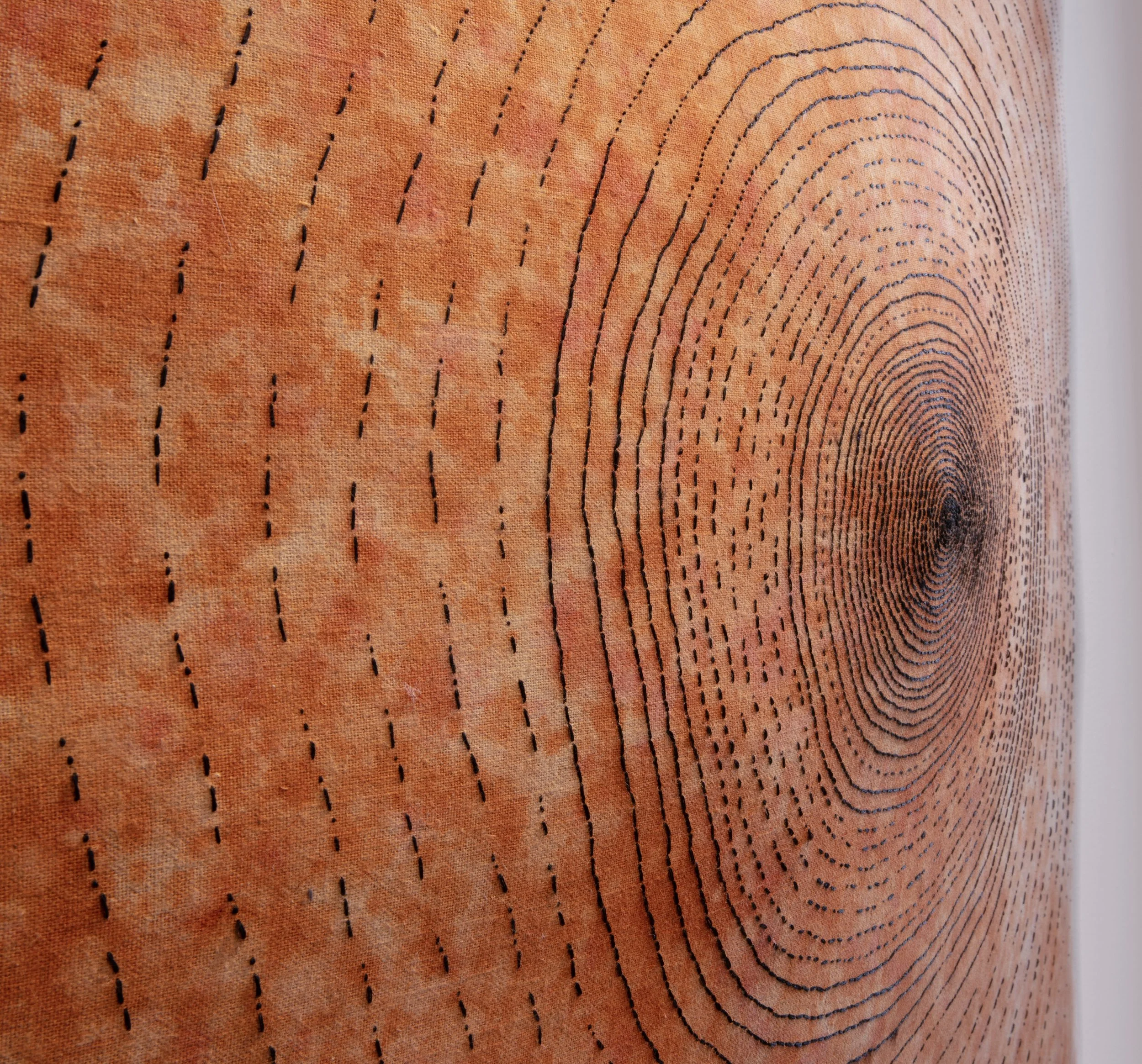
In Common Threads and Timekeeper, stitch becomes a durational recording system. Repeated punctures accumulate into bodies, spirals, messages, and traces, embedding time, memory, and labour into linen. Morse code introduces another layer of transmission, allowing information to exist materially even when it remains unreadable to the viewer. The physical act of stitching becomes a counterpoint to the speed and apparent immateriality of digital communication.
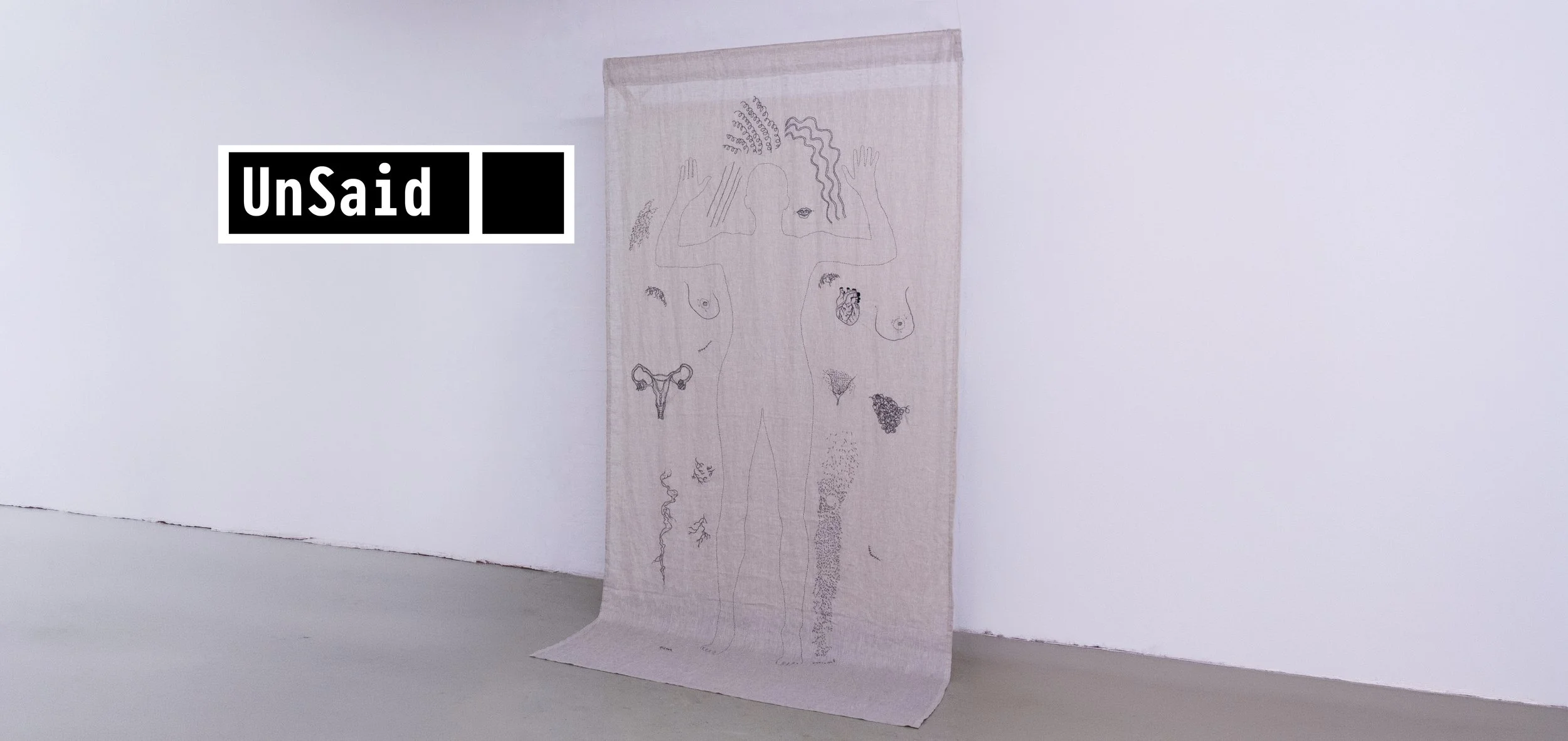
This continuum extends into Absence 13, where censored fragments of the female body are displaced beyond a transparent stitched figure. The viewer can occupy the missing space, becoming implicated in the work's investigation of visibility, absence, and control. The physical encounter can then generate another digital trace as the work is photographed, circulated, and re-entered into systems of representation.
Across my practice, material is therefore an active agent. Photography, chemistry, light, screen, resin, linen, thread, data, and the body all participate in producing meaning. I am interested in what is lost, retained, distorted, and transformed each time a human presence passes from one system into another.
The trace is never fixed. It is continually translated and rewritten.
Essentially, I am asking what remains of us in the spaces between body, image, technology, memory, and material: what we leave behind, what is recorded without our permission, what disappears, and what we deliberately make endure.
Obscurations

Losing Touch solo exhibition


Harvest